AlNiCo also has relatively low resistance to demagnetisation, so its magnetic circuit and any keeper supplied with it need careful consideration.
This guide explains the general precautions that apply to permanent magnets and the additional requirements for neodymium, samarium cobalt, ferrite and AlNiCo magnets.
At a glance
Magnet Care Guide
NdFeB
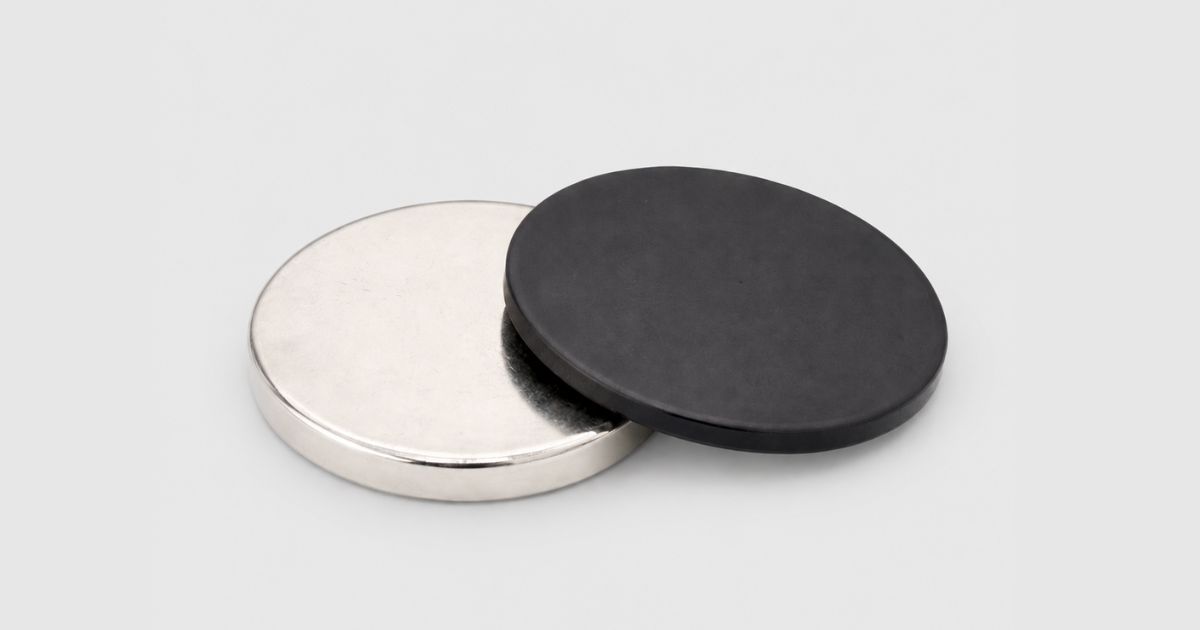
Neodymium
Highest magnetic strength
Compact and powerful, but generally the most vulnerable to corrosion if its protective coating is damaged.
MoistureHigh concern
ImpactBrittle
HeatGrade-dependent
Care focus Keep dry, protect the coating from scratches and chips, use non-magnetic spacers, and never exceed the rated temperature for the selected grade.
SmCo
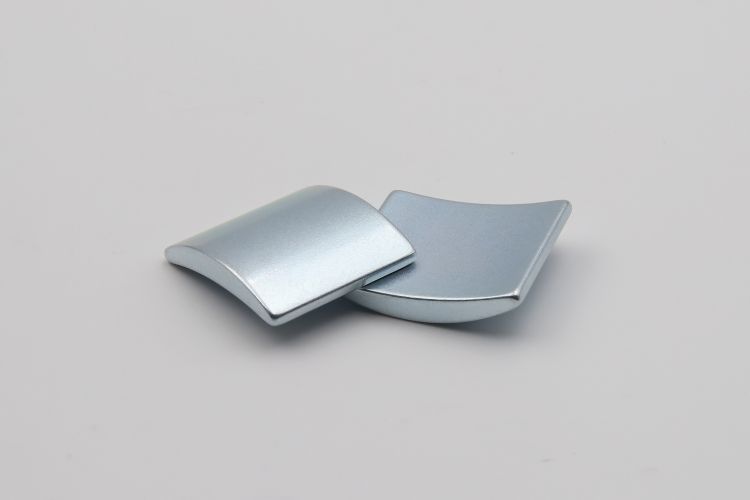
Samarium Cobalt
High-temperature stability
Naturally more corrosion-resistant than neodymium and well suited to demanding temperatures, but particularly brittle.
MoistureLow concern
ImpactVery brittle
HeatStrong resistance
Care focus Prevent magnets snapping together, cushion them during transport and avoid drops, shock loads and pressure on thin edges.
Fe
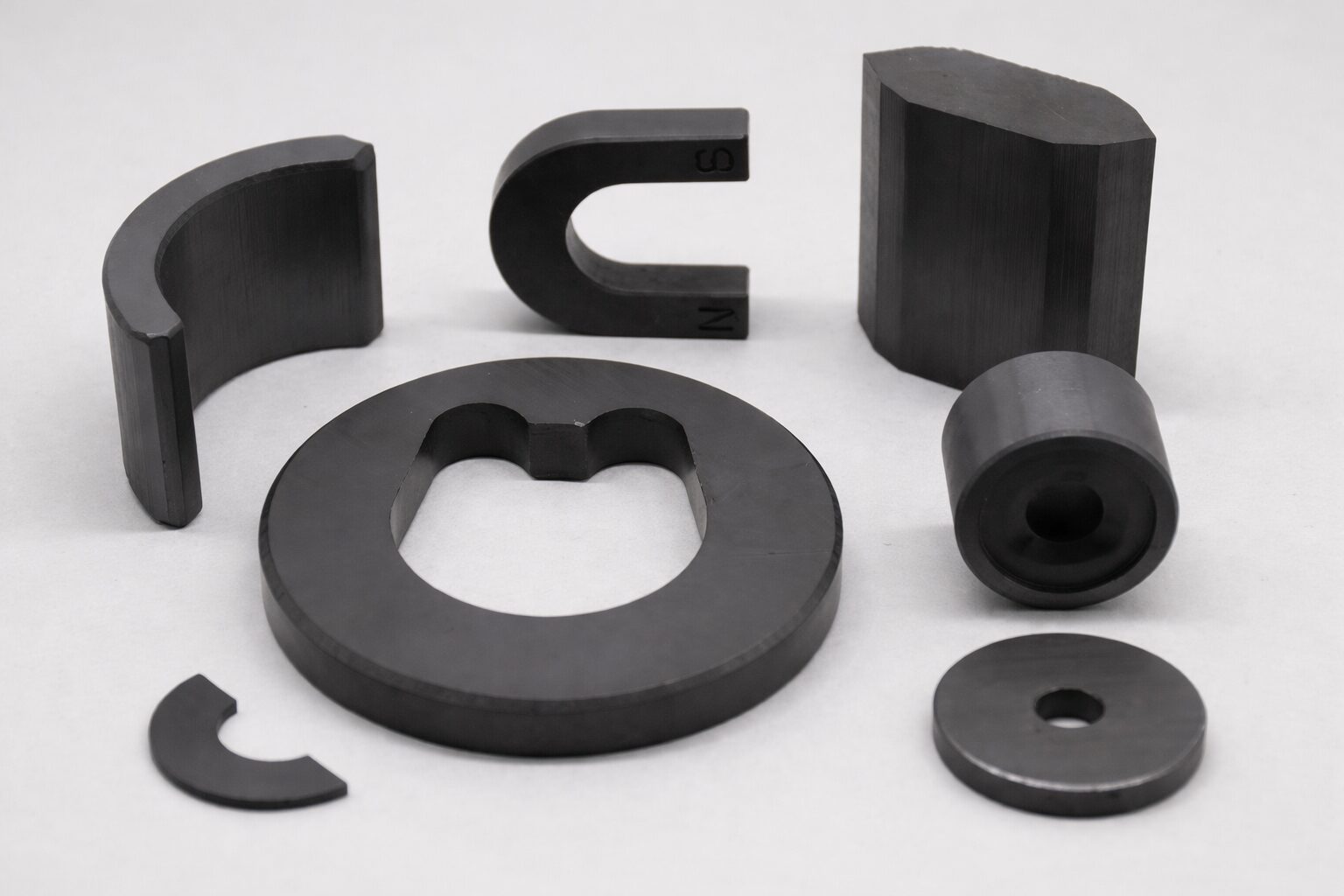
Ferrite
Durable and corrosion-resistant
Chemically stable and normally used without a coating, although its ceramic structure can crack or chip under mechanical shock.
MoistureLow concern
ImpactBrittle
HeatGood resistance
Care focus Avoid dropping, bending or point-loading the magnet. Use dividers for larger pieces and keep contact surfaces clean.
AlNiCo
AlNiCo
Excellent thermal stability
Performs reliably at elevated temperatures, but is affected by opposing magnetic fields or unsuitable magnetic circuit.
MoistureLow concern
ImpactBrittle
HeatExcellent stability
Care focus Store with the specified keeper or magnetic circuit intact, keep away from strong opposing fields and avoid impact or chipping.
General magnet handling and storage precautions
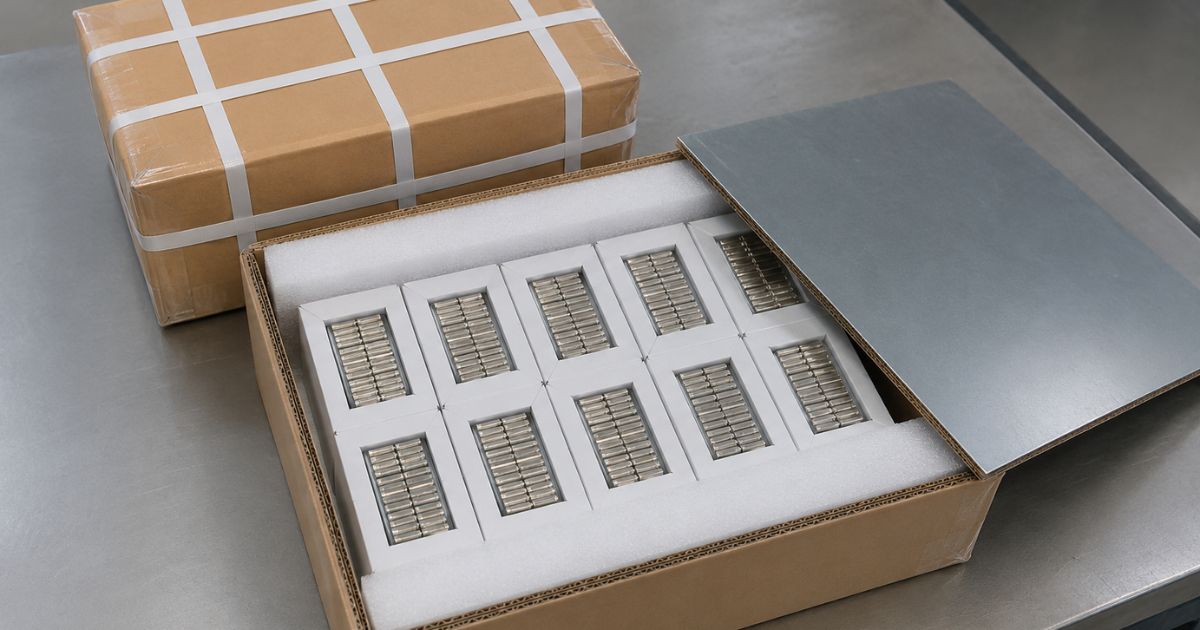
Keep magnets in their original packaging
Where possible, leave magnets in the packaging in which they were supplied until they are required.
Purpose-designed packaging helps prevent magnets from snapping together, attracting loose steel objects or producing an unnecessarily strong external magnetic field.
If magnets need to be repacked, use suitable non-magnetic spacers, trays or padded compartments. Do not place magnetised parts loosely into a box.
Prevent magnets from colliding
Many permanent magnets are hard and brittle rather than tough. Neodymium, SmCo, ferrite and AlNiCo magnets can all chip, crack or shatter if they are allowed to strike one another or a steel surface.
Separate magnets under control. Where appropriate, sliding two magnets apart laterally can be safer than trying to pull them directly apart. The correct method will depend on the size, geometry and force involved.
Control the handling area
Use a clean, uncluttered work area with a non-magnetic surface. Remove loose ferrous items and personal objects such as tools, keys and watches before opening magnet packaging.
For strong or large magnets:
Wear suitable eye protection and gloves.
Use non-magnetic tools and purpose-designed fixtures where required.
Keep fingers and other body parts out of potential pinch points.
Handle one magnet or controlled pack at a time.
Make sure anyone nearby understands the magnetic hazard.
Protect people and equipment
Strong magnetic fields may interfere with pacemakers and other implanted medical devices. Keep magnets away from people with affected devices and follow the device manufacturer’s guidance.
Magnets can also affect magnetic media, measuring equipment, sensors, watches and some electronic devices. The required separation distance cannot be reduced to one universal figure because it depends on the magnet and the equipment involved.
Magnets must never be treated as toys. Swallowing more than one magnet, or a magnet together with another metal object, is a medical emergency.
Stay within the specified temperature range
Operating temperature is grade and application specific. A magnet exposed to excessive heat may suffer an irreversible loss of magnetic performance even if it still appears physically undamaged.
Standard neodymium grades commonly have lower operating-temperature limits than high-temperature neodymium, SmCo or AlNiCo grades. Geometry and the magnetic circuit also influence the risk of demagnetisation, so a material name alone is not enough to define a safe limit.
How to store and handle neodymium magnets
Neodymium iron boron magnets provide very high magnetic performance in a compact volume. Their strength creates significant attraction and pinch hazards, while the sintered material itself is hard and brittle.
Neodymium is also susceptible to corrosion. Sintered neodymium magnets are therefore normally supplied with a protective coating such as nickel-copper-nickel, epoxy or zinc.
Good practice for neodymium magnets includes:
Keep magnets clean and dry.
Protect plated or coated surfaces from scratches, chips and abrasion.
Store magnets in separated rows, trays or compartments so they cannot snap together.
Retain the original packaging and any corrosion-control materials supplied.
Inspect damaged coatings before the magnet is placed into service.
Avoid immersing neodymium magnets in water or exposing them to salt, acids, high humidity or other corrosive conditions unless the coating and full assembly have been specified for that environment. A coating improves protection but does not automatically make a magnet suitable for indefinite immersion or every chemical exposure.
Their main handling limitation is mechanical. Sintered SmCo is exceptionally hard and brittle, so thin sections, sharp corners and edges may chip if magnets collide or are subjected to impact.
Good practice for SmCo magnets includes:
Store individual magnets or controlled stacks in padded compartments.
Keep magnets separated so they cannot accelerate towards each other.
Protect corners, edges and thin sections during transport and assembly.
Use suitable fixtures where magnetic attraction could make manual positioning unsafe.
Keep parts clean and dry, even where no protective coating is required.
Do not assume that corrosion resistance makes SmCo mechanically robust. Avoid dropping the magnets, allowing them to strike steel tooling or applying shock, prying or poorly distributed clamping loads.
How to store and handle ferrite magnets
Ferrite magnets are naturally corrosion resistant and are commonly used without a protective coating. They are durable in many wet, humid or outdoor applications when correctly specified.
However, ferrite is a ceramic material. It can chip or fracture under impact, bending or concentrated mechanical loads. Rings, arcs and components with thin cross-sections require particular care.
Good practice for ferrite magnets includes:
Use divided trays, layers or padded packaging to stop parts colliding.
Support large rings, arcs and thin sections across their full area.
Keep mating surfaces clean so trapped debris does not create point loading.
Use assembly fixtures that distribute pressure evenly.
Confirm low-temperature and thermal-cycling requirements for the selected grade.
Avoid dropping ferrite magnets or using the magnet as a structural component unless the mechanical loading has been considered in the design. Do not force a ferrite ring or arc into position by bending, levering or striking it.
How to store and handle AlNiCo magnets
AlNiCo magnets offer excellent temperature stability and high-temperature capability. They are also naturally corrosion resistant and normally do not require a protective coating.
Unlike rare-earth magnets, AlNiCo has relatively low coercivity. This means it is more vulnerable to demagnetisation when exposed to an opposing magnetic field or when removed from the magnetic circuit for which it was designed.
Some AlNiCo magnets are supplied with a steel keeper across the poles. The keeper provides a closed magnetic path and helps preserve the magnet’s operating condition during storage.
Good practice for AlNiCo magnets includes:
Leave any keeper in position until the correct stage of installation.
Store the magnet in its intended magnetic circuit or packaging where possible.
Record pole orientation before dismantling an assembly.
Protect the magnet from impact; AlNiCo is hard and brittle.
Consult the supplier before changing geometry, air gaps or the surrounding magnetic circuit.
Avoid strong opposing magnetic fields and unnecessary removal or replacement of keepers. If an AlNiCo assembly is dismantled incorrectly, remagnetisation may be required before its original performance can be restored.
What about magnet assemblies?
Once magnets are bonded, pressed or mechanically retained inside an assembly, the housing may reduce some handling risks but introduce others. An assembly can produce a stronger concentrated field than an individual magnet, and steel housings may create powerful pinch points.
Follow the assembly drawing, work instruction and specified adhesive or retention process. Do not heat, machine, weld or dismantle a magnetic assembly unless the effect on the magnets and the magnetic circuit has been considered.
A practical pre-use checklist
Before handling or installing permanent magnets, check:
Is the material, grade, coating and magnetisation clearly identified?
Is the operating temperature within the specified limit?
Is the packaging suitable for the magnet’s size and force?
Are coated magnets dry and free from visible damage?
Are brittle parts protected from impact and concentrated loading?
Are keepers, spacers or fixtures being used as intended?
Have pinch points and nearby ferrous objects been controlled?
Are sensitive equipment and people with implanted medical devices kept clear?
Need help selecting the right magnet?
Speak to our team about the most suitable material, grade, coating and configuration for your application.